

44 Points and Counting
United’s unlikely run under Carrick has brought Champions League qualification into view. But the real question isn’t whether they get there - it’s what they do when they arrive.

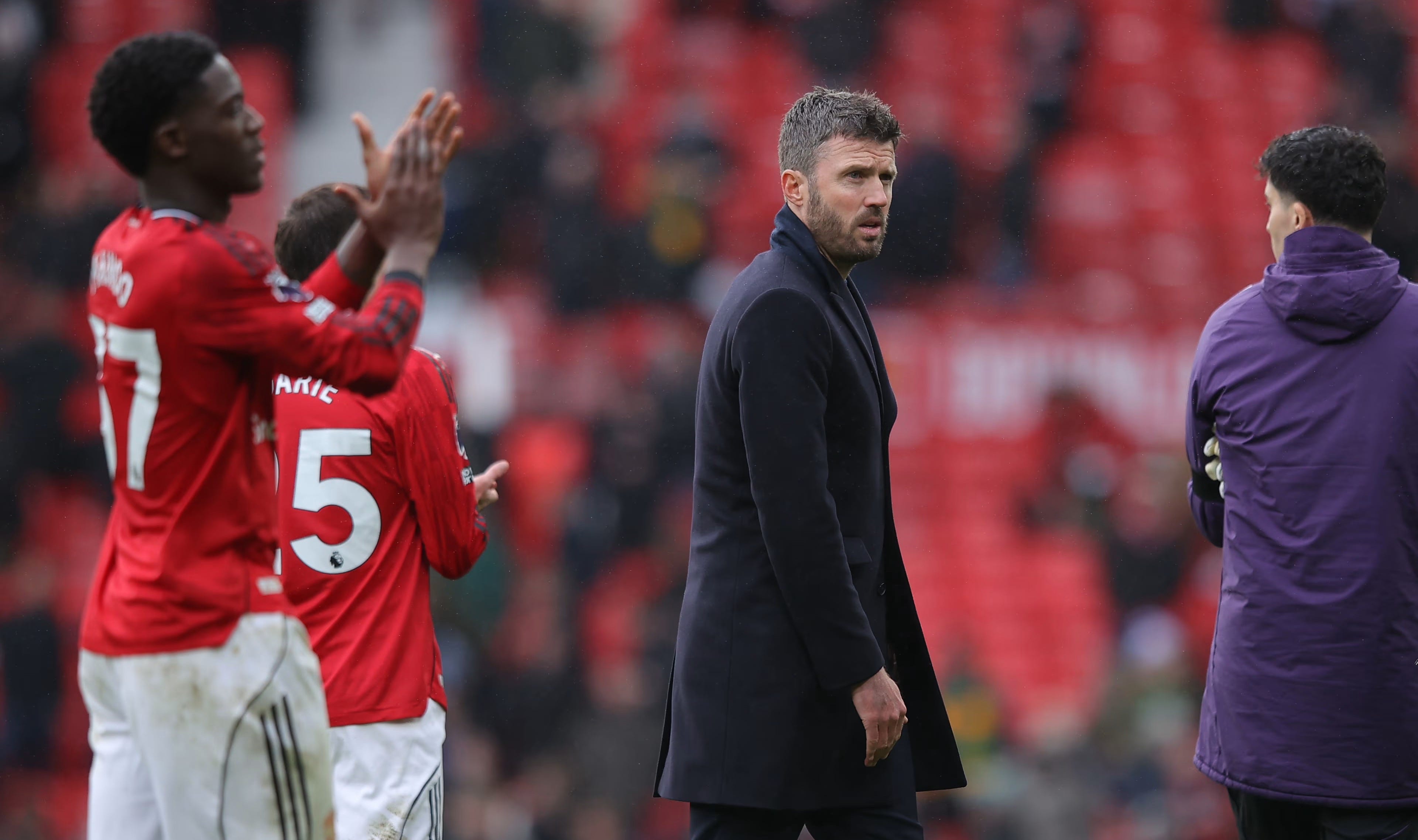
Four wins from four. Old Trafford buzzing. Bruno unshackled. The vibes, as the kids say, immaculate.
We’ve been here before. The music is familiar. So is the hangover.
Michael Carrick’s start as United manager mirrors Ole Gunnar Solskjaer’s 2018 honeymoon so precisely it’s uncomfortable. The same surge of optimism, the same reclaiming of an attacking identity, the same sense that maybe the answer was in the building all along. Both men won their first four games. Ole went on to win eight on the bounce. Both inherited a squad that looked broken, a vibe that was toxic - and made it look easy. Both represent the sentimental, DNA-infused appointment that a certain type of United fan has always craved.
But sentiment doesn’t win leagues. And the stakes now are higher than they were in December 2018, because this time United are staring at something tangible: a Champions League place they had no right to expect a month ago, and a summer transfer window that could define the next three years.
The maths has never been kinder than this season. The question is whether United are smart enough to use it.
Act I: Numbers
Let’s start with where we are.
United are fourth in the Premier League on 44 points from 25 games. That’s three points clear of Chelsea in fifth and five ahead of Liverpool in sixth. Goal difference is a healthy plus 10. There are 13 games remaining.
Under Carrick, United have won all four: Manchester City 2-0, Arsenal 3-2, Fulham 3-2, Tottenham 2-0. Twelve points from twelve. United have won four Premier League games in a row for the first time since February 2024 under Erik Ten Hag.
More importantly, United are now unbeaten in their last eight league games. Five wins, three draws. It is the longest unbeaten run since January 2022, under Ralf Rangnick - and that run ended in ignominy. This one feels different, though feelings are unreliable narrators at football clubs.
The remaining fixtures offer a mix of the winnable and the genuinely difficult. West Ham away on Tuesday. Then Everton away, Crystal Palace at home, Newcastle away, Villa at home, Bournemouth away. The run-in includes Chelsea away, Liverpool at home, and a final-day trip to Brighton. There are points to be dropped in there. The question is how many.
If Carrick maintains anything close to his current points-per-game average, which is probably unsustainable, United could finish close to 70 points.
A more conservative projection, based on the season-long average of 1.76 points per game, would land them around 66. Historical data suggests that 65 points is typically enough for a top-five finish. Last season, Aston Villa qualified fourth with 68. Fourth will probably be a lower number this season.
Here’s where the maths gets kind. England’s dominance of UEFA’s coefficient table means the Premier League is almost certain to receive a fifth Champions League place for the 2026-27 season. The current coefficient standings show England on 19.430, miles ahead of Germany on 14.642 and Spain on 14.093. All nine English clubs that started this season in European competition are still active. The gap is insurmountable.
In practice: fifth is enough.
Chelsea and Liverpool are snapping at United’s heels, but both have problems of their own. Chelsea’s post-Maresca rebuild under Liam Rosenior is still finding its feet. Liverpool, sixth and five points adrift, lost at home to Manchester City on Sunday in chaotic fashion, Dominik Szoboszlai scoring a magical free-kick, getting sent off, and watching Erling Haaland convert an injury-time penalty in between.
For once, the maths is on United’s side. The question is whether they deserve it.
Act II: What It Unlocks
Champions League football is not just a trophy on a shelf or a Wednesday night under floodlights. It is a financial and strategic lever.
The revenue implications are significant. Qualification brings somewhere between £80 and £100 million in broadcasting and prize money, depending on how far United progress. It triggers bonuses in sponsorship agreements. It changes the pitch to prospective signings. For two years, United have been selling players on history and potential. Champions League football lets the club sell the present as well.
This matters because the summer of 2026 is shaping up as the most consequential transfer window since Ratcliffe took operational control of the club.
Casemiro’s departure is confirmed, despite the Brazilian’s excellent form. When his contract expires in June it’ll take £350,000-a-week in wages off the books. He scored against Fulham, provided a midfield masterclass against Spurs. Even under Amorim, a tweaked role with less running had seen an uptick in performances. But in truth the decision was made months ago. The club is not renewing, not in that wage bracket.
Manuel Ugarte will also be sold. The Uruguayan has never settled after arriving as part of a club-inspired purchase, first for Ten Hag and then reuniting with Amorim. That vision is now obsolete, and Ugarte’s fit with Carrick’s system is questionable at best. He now represents sunk cost, not strategic asset. Even if Carrick is replaced by an outsider in the summer, Ugarte has proven to be a disappointment.
Two midfield departures. And Kobbie Mainoo cannot carry this alone.
The club has reportedly set aside something close to £200 million for summer spending - projected EBITDA plus sales or thereabouts.
And the primary focus is clear: rebuild the middle of the pitch. The names on the shortlist are familiar. Elliot Anderson at Nottingham Forest. Sandro Tonali at Newcastle. Alex Scott at Bournemouth. Carlos Baleba at Brighton. Adam Wharton at Crystal Palace. Perhaps Lille’s Ayyoub Bouaddi or Stuttgart’s Angelo Stiller.
Every name comes with a caveat. This is the transfer market, not a catalogue.
Anderson is the most complete option, a box-to-box presence who has thrived at Forest. But Manchester City want him too, and City have a way of winning recruitment battles when they decide a player matters.
Tonali would bring technical excellence and Champions League pedigree, but Newcastle are Saudi-owned and have no need to sell - certainly not to a club they consider a direct rival.
Wharton has been exceptional at Palace, but Liverpool are circling, and Wharton may already be mentally gone. Bouaddi is an extraordinary talent, but he only turned 18 in December. Is he ready for the pressure? Heavy hangs the shirt and all that. Meanwhile, Stiller's technical prowess is without doubt, but questions persist about whether his physical profile translates to the Premier League. Many suspect not.
The truth is uncomfortable: United need to get at least two of these right, perhaps even three, and the competition for the best is fierce. Champions League qualification helps. It doesn’t guarantee anything.
Beyond midfield, exits creating some financial space. Rasmus Hojlund’s loan at Napoli will probably become permanent - the option will be exercised if Napoli qualify for the Champions League. Marcus Rashford is doing well enough at Barcelona that his loan is likely to convert too, triggering the €30 million clause. Mason Mount’s future remains uncertain, with his output limited relative to his significant wages.
The wage bill is being reshaped whether fans see it or not. Casemiro’s departure alone frees up roughly £18 million a year. Add Ugarte, add Hojlund’s wages off the books, add Mount if he goes, and suddenly there is room to build something new.
The striker question, at least, has been shelved. Benjamin Sesko’s quality is evident, even if it has been a stop-start campaign. Whether Joshua Zirkzee remains beyond the summer is unclear, though his departure may open up a pathway for Chido Obi-Martin. In any case, Bryan Mbeumo’s recent selection up-front gives United enough options.
In defence, Harry Maguire’s potential departure may prompt an entry into the market - though Ayden Heaven and Leny Yoro wait on the sidelines. Alongside Matthijs de Ligt, if he ever returns from injury, it’s just about enough.
Midfield is the priority.
Get that right, and the rest functions. Get it wrong, and United are back to buying ornaments for a house with no foundation.
Act III: Another Managerial Reset
Gary Neville said on Sunday that United “won’t be bounced” into giving Carrick the permanent job on the back of good results. Roy Keane has been more blunt: don’t give him the job even if he wins every game.
Their caution is understandable.
Solskjaer won his first six Premier League games in charge, signed a permanent contract, then won two of his last 10 that season.
There were both third and second-place finishes - and that disappointment in the Europa League final. But the bounce faded. The football became chaotic.
He left behind shattered confidence and a fanbase that had lost faith in quick fixes. The manager, once the great hope, left with a tear in his eye.
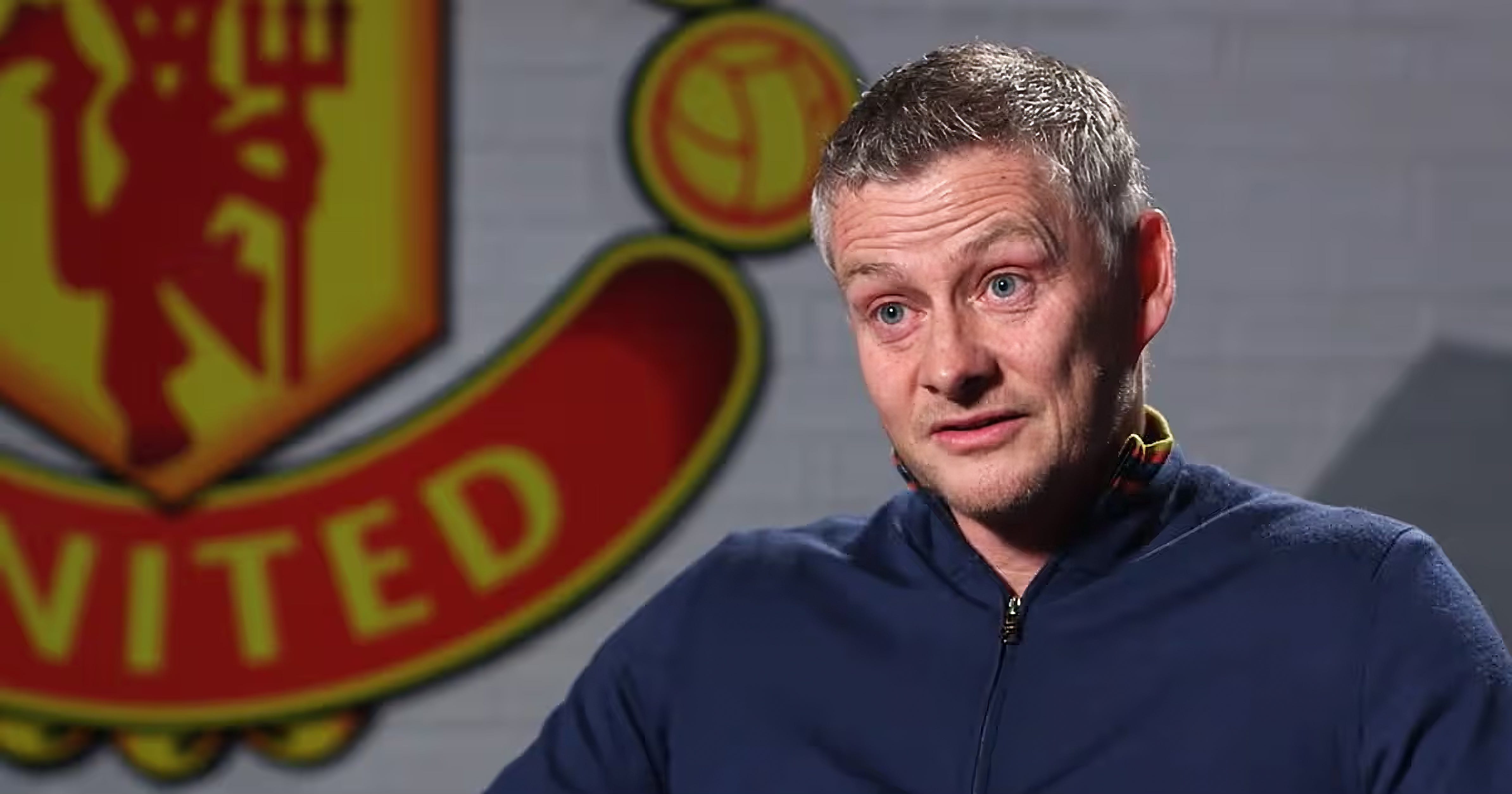
Carrick’s trajectory mirrors Solskjaer’s. The good vibes. The attacking intent. The sense that the shackles are off. The players speaking in glowing terms about the new boss. Luke Shaw after the Spurs win: “He’s made lots of differences.” Bruno Fernandes: “He’s given us responsibility and freedom.”
But it’s a mirage, of course - a surface level observation that makes little difference to the choice that Jason Wilcox and Omar Berrada will make before the new season starts in August.
The key issue is not results any more than it is Carrick’s CV - or lack thereof if you believe the critics.
Carrick’s two and a half years at Middlesbrough were far from glamorous. Boro narrowly missed the Championship play-offs twice before Carrick was dismissed last June. It is not the kind of elite-level success that fills pundits with good vibes. Nor was Solskjaer’s title victories with Molde in Norway and we remember how the critics pilloried him from the start.
In any case, the defining criteria for the next manager is the strategic path the club is taking. Or in other words the top-down vision that we were promised when Ratcliffe walked into the club two years ago: a club playing style, recruitment driven from the centre, and a head coach responsible for just that - coaching.
The lesson from Amorim should be instructive here.
Before Amorim was appointed in November 2024, Ratcliffe spoke repeatedly about building this structure. The idea was to identify the club’s footballing philosophy first - what kind of football United wanted to play, how they wanted to recruit, how they wanted to develop players - and then find a coach who fit that vision.
Philosophy first, then personnel.
They threw the playbook out. Amorim was available, exciting, and came with a compelling record at Sporting. United moved fast - and 14 months later, he was gone, sacked after falling out with the recruitment department over transfer targets he was never going to define on his own, a cry-for-help that resulted in his sacking.
The failure was not just about results. It was about fit. Amorim’s system required players United didn’t have and couldn’t afford. His methods clashed with the structure Wilcox and Berrada are trying to build. He was the wrong coach for this moment. Talented, perhaps. But talent without fit is just friction.
Surely that lesson has been learned.
The question for Carrick is not “can he win games?” He can. He is. And Wilcox is on the training ground daily seeing the work that’s going into it all. It’s a serious interview process.
The fundamental question is whether he fits the vision INEOS claims to have for this club. Does he believe in the recruitment model? Will he work with Wilcox and Christopher Vivell, trusting the club’s data department and their judgment? Can he develop young players, or does he need finished articles? Is he prepared to build something over three years, or is he a short-term fix who has exceeded expectations?
And a point we don’t know - is he one of the game’s great tactical thinkers or running hot on attacking intent and good vibes.
Neville’s point about not being “bounced” is the right one. A proper process matters. Ratcliffe promised one before Amorim and abandoned it. The club cannot afford to make the same mistake twice.
But a proper process does not mean ignoring what is in front of you. Carrick has earned a place in the conversation. He has taken a broken squad and given it immediate belief. He has restored attacking intent without sacrificing defensive solidity.
He has man-managed a dressing room that hadn’t turned toxic under Amorim, but had certainly lost faith.
The question is not whether to consider him. It’s whether he is the right fit.
The Stakes are High
The club’s stated ambition is to win the Premier League by 2028. They call it Project 150 - a reference to United’s 150th anniversary. When Ratcliffe took control, Champions League qualification and a run at a cup or two was an expectation. Then came the disaster of all disasters last season - and the appointment of a coach whose charisma far outstripped his capacity to handle the demands of life at Old Trafford.
By January 2026, it was a joke. Slipping in the table, out of the cups. Amorim gone.
Now, improbably, Champions League is back on the table - perhaps even expected.
Qualification will bring revenue, recruitment leverage, and proof of concept. It will show that a quiet January window, with no signings, just financial discipline, is a lesson in strategic patience rather than negligence. It will give the club the platform to execute the summer that’s been planned for some time.
Missing out would mean another year in the wilderness. Harder to attract top targets. Questions about whether the model works. Another cycle of hope deferred.
The numbers say United will get there. Forty-four points, 13 games to go, a fifth-place lifeline thanks to England’s coefficient dominance. The maths has never been kinder.
But the maths only gets you to the door.
Champions League qualification is an opportunity. What matters is what the club does with it - the players signed, the structure built, the manager the club trusts to lead.
United have spent a decade treating opportunities as ends rather than means. They qualified, celebrated, then squandered. The summer of 2026 cannot be another entry in that ledger.
Carrick has given the club a chance. The vibes are immaculate. But vibes don’t last.
Ask Ole.
No Question About That is produced by Studio 1878, my podcast production company. More information here.
I came here to commend you on your article on that @@@@ of a co-owner we have. Brilliant article.
Thank you from one of those who is the target of such vile, yet deliberate language of hate.
Makes ones lament for the days of Martin Edwards. He may have had his faults but at least he wasn't a genocidal supporting blood sucker nor a racist, tax dodging twat.
Good article Ed. I expect it will be Tuchel or Carrick. I fear for Carrick after he loses a few games, all the old criticisms of his CV will come out.