

The Carrick Effect
How United beat City and Arsenal in eight days

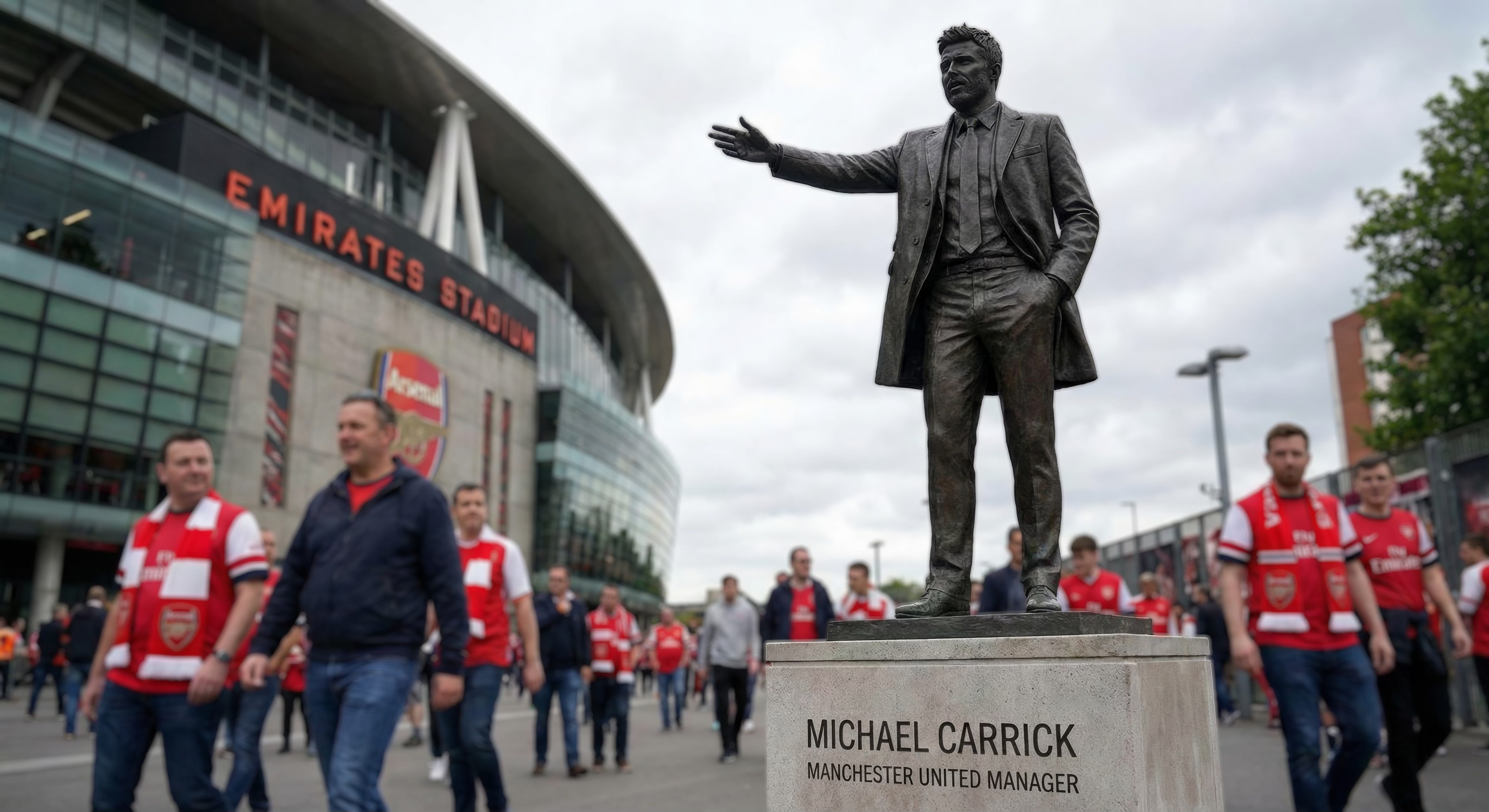
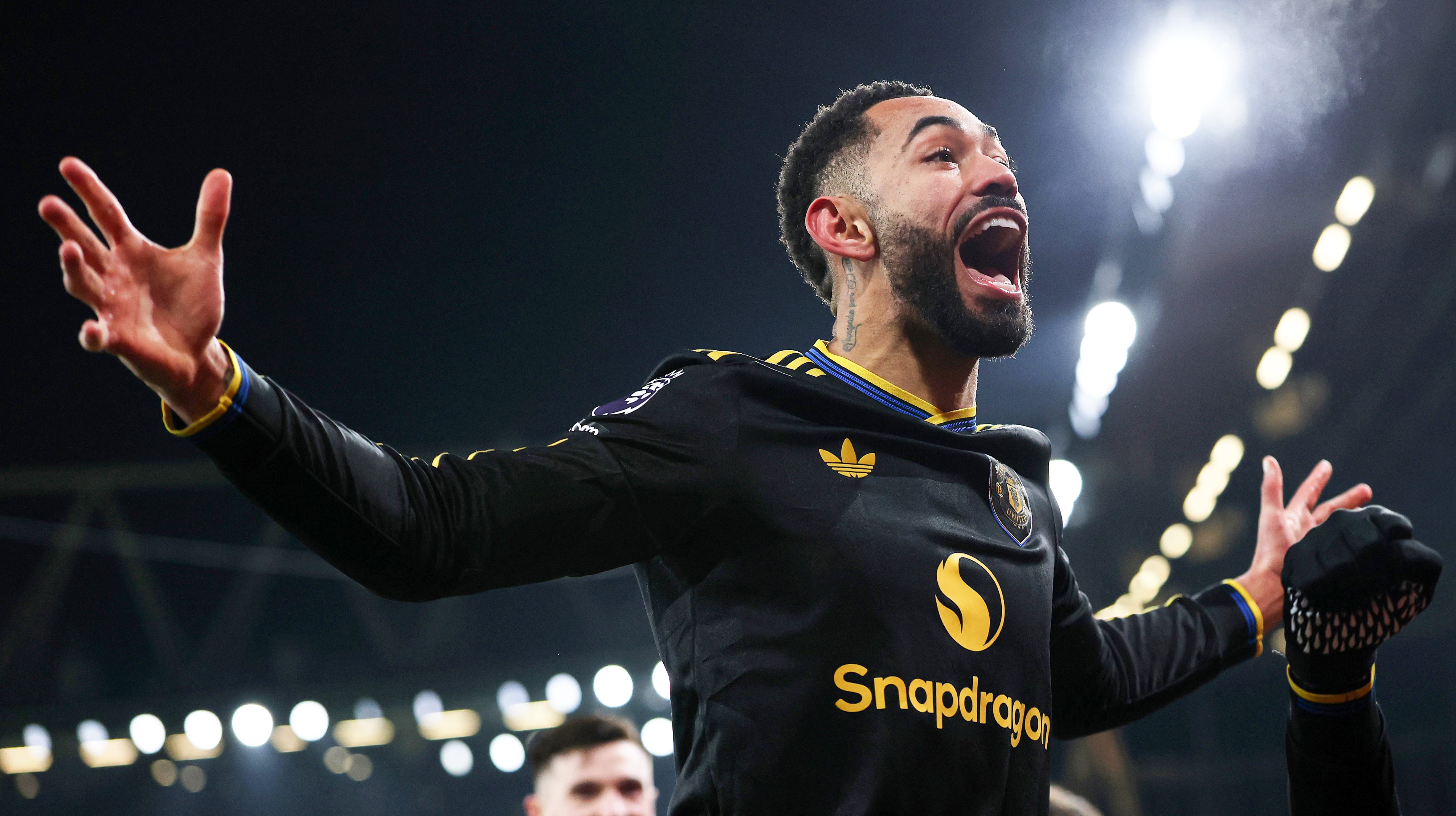
Emirates Stadium, 87th minute. Matheus Cunha picks up the ball 25 yards out, shifts it onto his right foot, and curls one into the far corner. The away end erupts. Three minutes earlier, Mikel Merino had bundled home from a corner to rescue a point for Arsenal. Or seemingly so.
In the technical area, Michael Carrick allows himself a moment. His kids are in the away end - “they’re not kids anymore,” he’ll say later - watching their father write a new chapter in a story that began at this club two decades ago.
“It’s the passion, the excitement of these types of games,” Carrick said afterwards. “To come out on top is fantastic.”
Two games. Two of the best teams in England. Six points.
Manchester City, 2-0 at Old Trafford. Arsenal, 3-2 at the Emirates. United’s first league win in north London since December 2017 when Paul Pogba and Jesse Lingard Milly Rocked to victory. Arsenal’s first home league defeat of the season. United into fourth place, two points clear of Liverpool, the title race suddenly not quite as settled as it seemed a fortnight ago.
In the away end, the travelling support were singing “We’re gonna win the league.” Absurd. But after eight days under Carrick, somehow not entirely beyond the pale.
“Late goals, late winners in big games,” Carrick said, a smile breaking through. “It’s what we all crave, really.”
Rediscovering identity
Carrick had three days to prepare for the Manchester derby. Three days to impose something - anything - on a squad that had lost its way under Ruben Amorim, a squad that looked confused and dispirited and unsure whether they were coming or going.
He made five changes from the FA Cup defeat to Brighton. Amad and Bryan Mbeumo went straight into the team after returning from the Africa Cup of Nations. Harry Maguire, out since November with a hamstring injury, was recalled to the starting eleven. The shape was a 4-2-3-1 that morphed into something closer to a 4-4-2 in defensive phases. Gary Neville called it “the return of United DNA.” Perhaps that’s overstating it. What it actually was: clarity.
United had 31.8% possession. They had seven shots on target. City had one.
The approach was direct in a way Amorim’s teams never were. Penetrating balls over the top, huge switches of play, width restored after months of everything funnelling through central areas. Mbeumo was given what Carrick described as “a free role, in many ways, in a partnership with Bruno, to drift and fill different spaces.” Bruno Fernandes, finally playing as a number 10 rather than shuttling between deeper positions, orchestrated the counter-attacks that tore City apart.
The opening goal was vintage United. A turnover in midfield, quick vertical passing, Fernandes slipping Mbeumo through on goal. He finished across the goalkeeper. Old Trafford, genuinely rocking for the first time in months, with Carrick jumping in the technical area.
Patrick Dorgu’s second, arriving at the near post to convert Cunha’s cross, put the result beyond doubt. Three more goals were chalked off for offside. Maguire hit the crossbar in the third minute. Amad hit the post late on. It could have been five or six.
“One important thing Michael Carrick said is to use the energy of the fans,” Lisandro Martinez explained afterwards. “And today we did it.”
Up in the stands, Sir Alex Ferguson was watching, smiling.
Preparation
The Arsenal game demanded something different. City had arrived at Old Trafford in poor form, their makeshift defence exposed by United’s directness. Arsenal were top of the league, unbeaten at home all season, favourites to end a 22-year wait for the title. The Emirates would not offer the same atmospheric lift as Old Trafford. United would have to create their own energy.
Carrick pulled an all-nighter studying Arsenal’s patterns. What he saw: a team built on wide play, on Bukayo Saka’s brilliance down the right, on set-piece dominance, on a powerful midfield trio of Declan Rice, Martin Zubimendi and Martin Odegaard that controlled games through territorial possession. What he also saw: anxiety. Arsenal had drawn their previous two league games, against Liverpool and Nottingham Forest. City and Aston Villa had won earlier on Sunday, cutting the Gunners’ lead before kick-off. The pressure was building. It showed.
“We understood the flow of the game,” Carrick said. “You knew at times we would be up against it, and we needed to dig in. We wanted to try and take control as well. Away from home in these big games you have to take an element of control, and calm things down a little bit.”
The tactical adjustments were subtle but significant. Diogo Dalot was given a strict marking job on Leandro Trossard, staying compact rather than overlapping. Luke Shaw was assigned to Saka, discipline over adventure. Dorgu, nominally a wide player, drifted inside to overload the central midfield, to give Rice and Zubimendi an extra body to worry about when they tried to play through the lines. He scored a brilliant goal and made the most defensive contributions in the game.
And then there was Mbeumo, again deployed as a false nine, his movement constantly unsettling William Saliba and Gabriel. “Bryan can drift and fill different spaces,” Carrick had said before the game. “Certain games will have different styles, so it’s great to have that flexibility.”
Big game, bigger performances
Arsenal dominated the opening quarter-hour in a way that felt ominous. Wave after wave of possession, United pinned in their own half, the crowd sensing an early goal. But the chances weren’t coming. Senne Lammens was largely untroubled. The organisation was holding.
“We understood the start of the game was going to be like that, as much as we tried to turn the momentum in our favour,” Carrick said. “I thought we started to take the ball and connections through the pitch, had that composure and a few moments gaining a bit of confidence as well.”
The opening goal, when it came, was cruel. A Saka cross from the right, Odegaard arriving at the near post, a mishit deflecting off Martinez - under pressure from Jurrien Timber - and trickling over the line. Own goal. Emirates roaring, as much as it does - which isn’t much. United, having just started to settle, suddenly behind.
Under Amorim, this is where United would have collapsed. The heads would have dropped. The shape would have disintegrated. The performance would have spiralled into something embarrassing.
Not this time.
“We were having a decent spell and seemed to be coming into the game when they scored,” Carrick said. “We showed the character to come back.”
Eight minutes later, a moment of chaos. Zubimendi, under no pressure, played a backpass towards David Raya that was nowhere near the goalkeeper. Mbeumo pounced. One touch to control, another to round Raya, a third to stroke it into an empty net. His 50th Premier League goal. His eighth of the season. He has now scored against Liverpool, Manchester City, and Arsenal. For a player signed in the summer for £65 million, the return is already looking like a bargain.
The Emirates fell silent. The away end, 3,000 United supporters crammed into the corner, went berserk. Limbs everywhere. The anxiety Carrick had sensed was now radiating from every home supporter.
Five minutes after the restart, Dorgu produced something extraordinary.
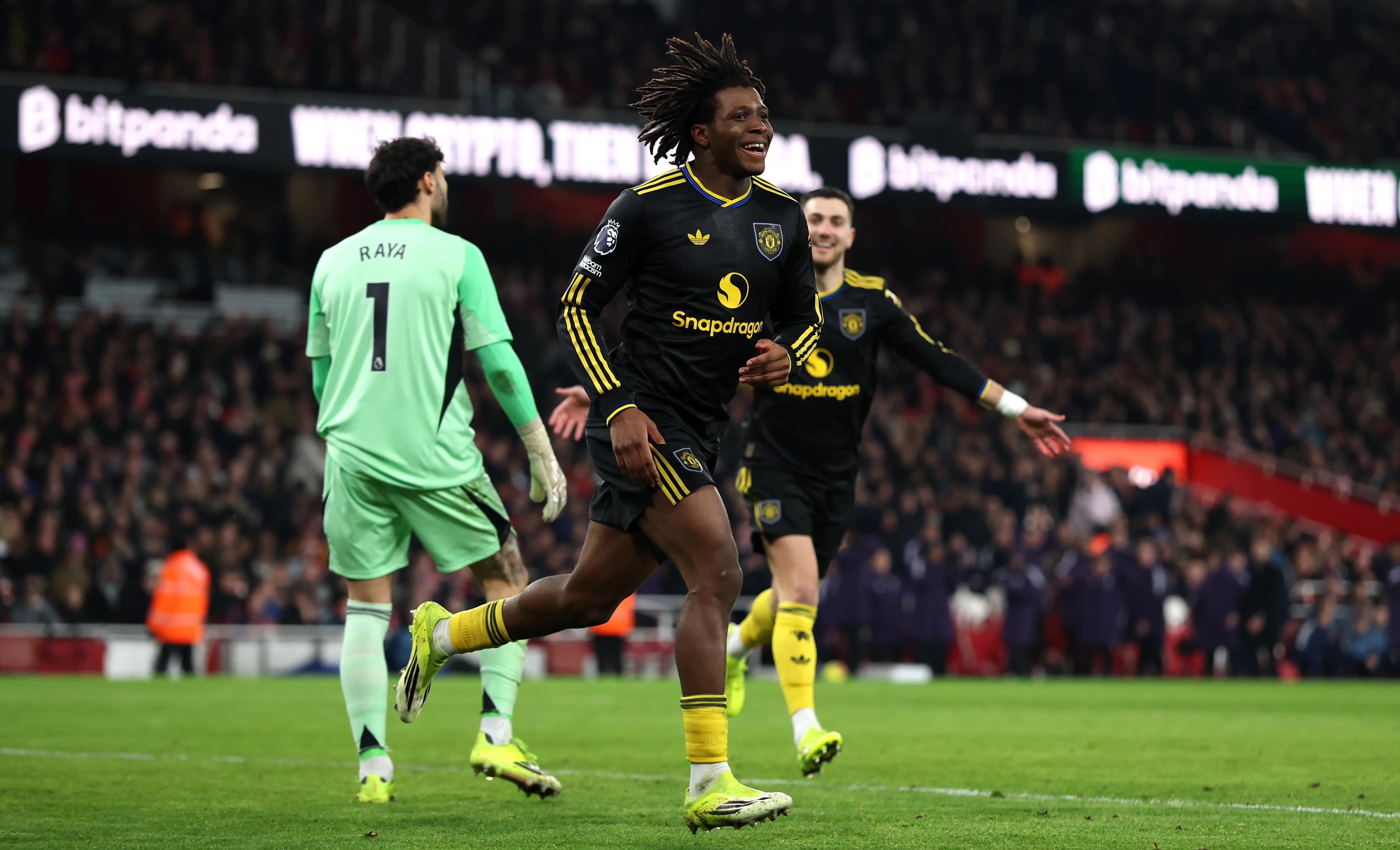
A one-two with Fernandes on the edge of the box. A nine pass sequence after a sustained period of United possession. The ball bouncing awkwardly. A half-volley from 20 yards that crashed off the underside of the crossbar and down over the line. Dorgu wheeling away, arms spread, disbelief on his face. United ahead at the Emirates.
“The move for Pat was a really good move, and the connection through the pitch,” Carrick said. “But to finish it the way he did, that was some finish. It takes your breath away a little bit.”
More than a little bit.
Mikel Arteta responded with a quadruple substitution. Viktor Gyökeres, Eberechi Eze, Mikel Merino, Ben White - all on at once. Desperation dressed up as tactical adjustment. Arsenal needed something, anything, to shift the momentum.
For 20 minutes, nothing. United defended their box with a discipline that has been absent for months. Maguire, immense throughout, won headers and made blocks and organised the line. Shaw mostly kept Saka quiet. The away end counted down the minutes.
Then, with six minutes remaining, the equaliser. A Saka corner, bodies everywhere, the ball bundled home by Merino despite Benjamin Sesko’s attempts to clear off the line. League One stuff but Emirates finally found some atmosphere. Arsenal pushing for a winner. United, surely, hanging on for a point.
Three minutes later, Cunha had other ideas.
“When Matheus came on, I just fancied him to score, to make an impact,” Carrick said. “Fantastic finish.”
Cunha picked up the ball on the edge of the box, drifted past one challenge, opened his body, and curled a shot into the far corner. Unstoppable. The away end lost its collective mind. Carrick, for a moment, forgot himself entirely.
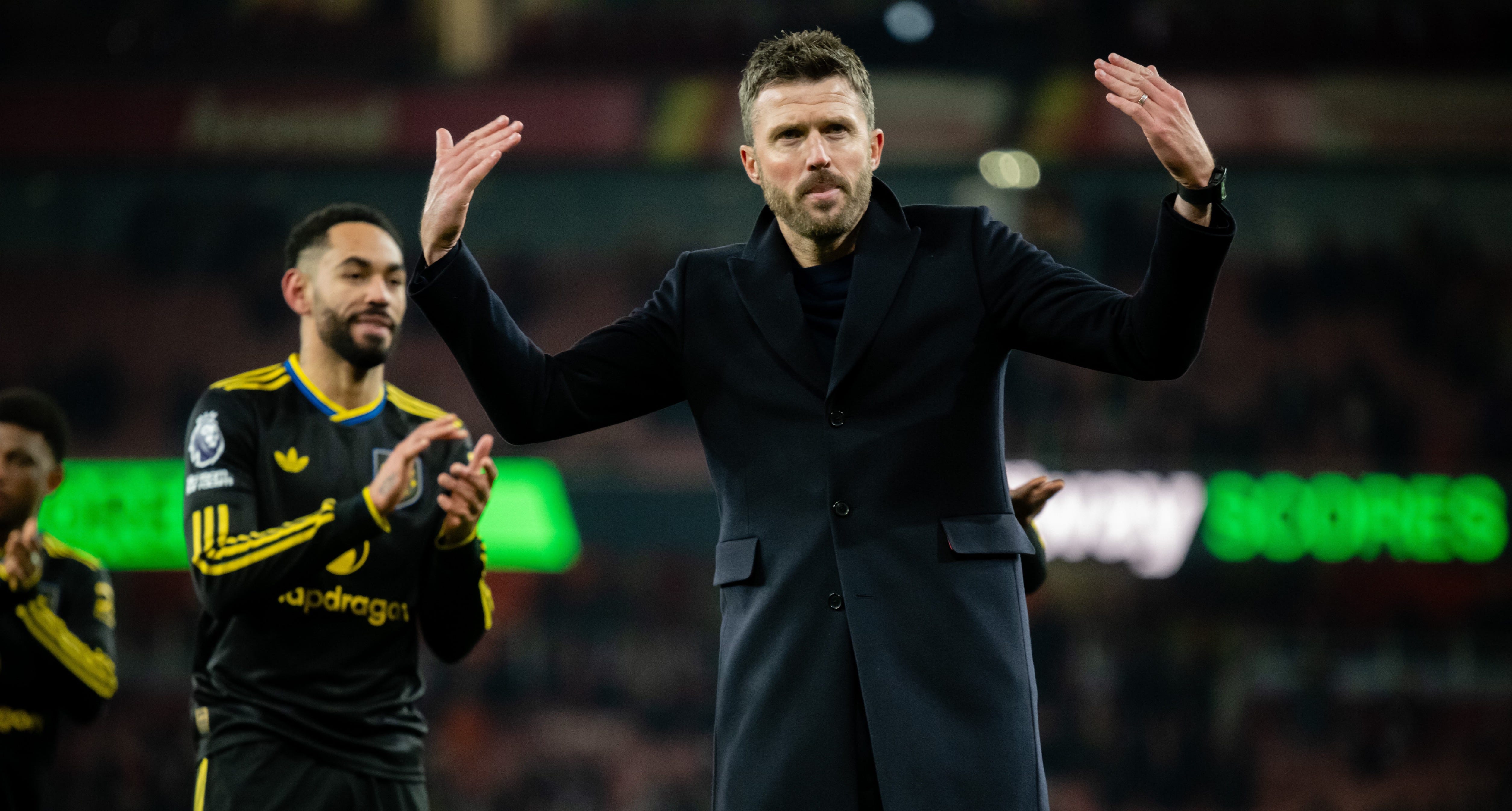
“It’s a collective feeling,” he said afterwards. “It’s great when it comes together and everyone’s in it and we can celebrate with the fans at the end. My kids were in there. That is emotional.”
A galvanising impact
Harry Maguire, named man of the match, stood in front of the cameras and said what everyone in the squad was thinking.
“Michael’s come in, he’s been brilliant with us, he’s brought a fresh energy, the group’s really galvanised. Obviously, two tough games, everyone thinks we’d come away from them with not many points, but to win both, it’s magnificent.”
The contrast with the Amorim era could not be starker. Under the Portuguese, United looked like a team of individuals pulling in different directions, uncertain of their roles, unsure whether the manager trusted them or was about to publicly criticise them in the next press conference. Under Carrick, after less than two weeks, they look like a team again.
Part of it is tactical. The 4-2-3-1 suits the personnel in a way Amorim’s rigid 3-4-2-1 never did. Bruno at 10. Mainoo the connector, Casemiro cleaning up in the double pivot. Width from Amad and Dorgu. A clear plan, clear responsibilities, players who know what they’re supposed to do.
Part of it is man-management. Cunha started neither game. He could have sulked. Instead, he came off the bench and changed both matches - an assist against City, the winner against Arsenal.
“He’s not started both games, but he’s had a real big impact,” Carrick said. “He’s been disappointed not to start, but he’s used that in a really good way. Two huge moments, and he totally deserves that winning goal for the way he has applied himself all week. I’m absolutely delighted for him.”
Cunha himself was asked about his role. “I know the quality of the group, everyone has the quality to play, everyone wants to play, of course. But the important decision is to help the team. Every single minute that you have is to give everything to help this team, to help the teammates.”
That attitude - collective, selfless, hungry - has been conspicuously absent at Old Trafford. Carrick, somehow, has found it in less than a fortnight.
With the win, a warning
If there is one thing Carrick refuses to do, it is to look too far ahead.
“I’m not getting all carried away,” he said in his post-match press conference, the words coming out almost before the question was finished. “We’ve got some bigger games coming up, because the next game is always the bigger game. We need to keep improving. Two massive games, there’s a lot of emotion, a lot of energy and a lot of confidence that you can take, but we’ve got to be humble and understand how we’ve got these results.”
The Ole Gunnar Solskjaer parallels are obvious. Solskjaer took over as caretaker in December 2018 and went on an extraordinary run, beating everyone in sight, playing fast and direct, restoring something that felt like the old United. He got the permanent job. And then, slowly, it fell apart.
Carrick knows that history. He was on the coaching staff for all of it.
“Looking too far ahead can come back and bite you,” he said. “We’ve taken this week by week, game by game. We’ll certainly continue to do that. But we’ve got to ride it and use the emotion, you have got to use the energy and use the confidence. You’ve got to be humble enough to understand how we could just achieve these two big results. We need to bottle it and use it again.”
Asked, inevitably, about the permanent job, he batted the question away with a half-smile.
“What happens next: I’m not going to be answering it every week. I’m enjoying it and I’ll continue to do what I can.”
The numbers are striking. Carrick has now managed five Premier League games for United - three in his brief caretaker stint in 2021, two in this second spell - and remains unbeaten. Four wins, one draw. Since his appointment, United have recorded more shots, more shots on target, and higher expected goals than any other team in the division.
The players are working, collectively. Mainoo, restore to the team, recorded the longest running distance in both games. He topped the intense sprints and fast sprints distance too. We were told he couldn’t run. It was always nonsense.
More importantly, they have moved into fourth place, 38 points from 23 games. Two clear of Liverpool, who lost at Bournemouth on Saturday. Arsenal’s lead at the top has been cut from seven points to four. The title race, which seemed settled, suddenly has life in it again.
United aren’t winning the league. Nobody is pretending otherwise. But Champions League qualification, which seemed a distant hope a fortnight ago, is now genuinely achievable. Just 15 games remain. Fulham at home next, then Spurs away, then West Ham at home. A winnable run before the tests get tougher.
“It’s a clear focus,” Carrick said. “Everything’s in front of us now, nothing’s going to change, but it’s a good start. You’ve just got to keep building.”
United are a feeling
What matters most, perhaps, is not the points or the position but the feeling. For the first time in quite a while, watching United is actually enjoyable. There is clarity. There is intent. There is a squad that looks like it wants to play for the shirt.
“It’s more about the feeling that this gives us, really, as a group,” Carrick said. “And the players and as a club, and certainly the supporters. That’s my concern - how that can bring us together and lift us, in a real positive manner.”
Carrick probably isn’t the long-term answer. The summer will bring a permanent appointment - Nagelsmann, Tuchel, someone from the continent - and the interim tag will be removed. That’s how these things work. United’s leadership have made a clear signal.
But for now, he’s shown that the patient isn’t dead. It just needed someone who understood what the medicine should be. Someone who knew the club, knew the standards, knew what it was supposed to feel like. That matters no matter how much it’s derided on Sky Sports.
“It’s only been 10 days,” Carrick said. “We know it’s not going to be perfect. You can’t expect to come here and dominate the ball. We’re just starting off and it’s a good starting point, but we need to start putting some layers on top, and we’ll try to do that in the coming weeks.”
Ten days. Two games. Two wins against the best teams in the country.
Not bad for a quiet man who never needed the spotlight.
Who knows what might have happened if Ole hadn't had CR7 forced on him by Ed Woodward, completely unbalancing everything Ole had built up in order to sell a few more shirts.