

Carrick Gets the Call
Michael Carrick will get the Manchester United job. Given the alternatives, it’s probably the right call. But the real test isn’t in the dugout.

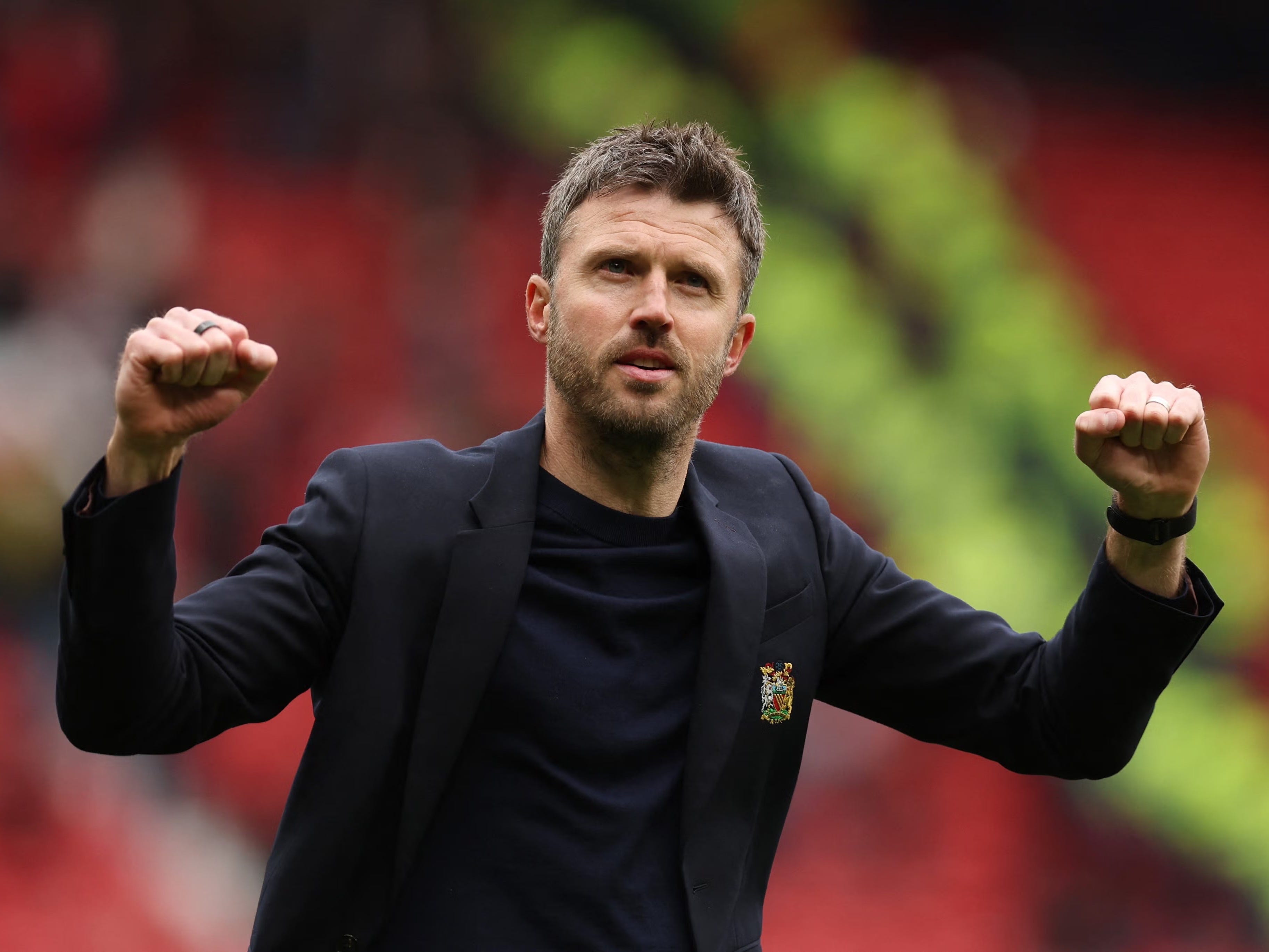
Michael Carrick will be Manchester United's next permanent manager. The only surprise is that anyone's surprised. The interim tag comes off. The man who steadied the ship gets to keep sailing it.
After 15 games, 10 wins, three draws, and two losses, with Champions League football secured and two matches still to play, the decision makes sense. Carrick has earned it. Whether he’s the right long-term answer is a separate question, and perhaps the wrong one to focus on.
United may not make an announcement until the season is over but the process has been playing out in the background: assess whether Carrick could handle the pressure, watch how the players responded, speak to alternatives on background. Then move.
United’s hierarchy saw enough. A 3-2 win over Liverpool at Old Trafford, the first league double over their rivals in a decade. Victories over City, Arsenal, Chelsea and Aston Villa as well. A squad that looked broken under Amorim rediscovering something like confidence. No drama. No leaks. No public complaints. In fact, something closer to the opposite: a playing group happy and confident in the manager’s methods.
Carrick may not be offered a long-term contract. Does it even matter? If it doesn’t work out, he'll be gone anyway. If United progress, there’s nowhere else he’d rather be.
INEOS may well be learning from past mistakes.
Why Not Someone Else?
Before celebrating or criticising the appointment, it’s worth asking: who else?
If ever there was a fantasy candidate, it was Carlo Ancelotti. The most decorated manager in European football, a man who won the Champions League with Real Madrid twice in three years. But Ancelotti committed to Brazil last May and just signed an extension through 2030. He's chasing a sixth World Cup for Brazil, not a phone call from the Lowry Hotel.
Similarly, Thomas Tuchel in enjoying life in international football. United spoke to him before re-appointing Erik ten Hag. England’s record was perfect in World Cup qualifying. It is a team playing with structure and purpose when it could have proven to be difficult post-Gareth Southgate. But Tuchel extended his contract through Euro 2028 in February. He’s an Anglophile. He’s described it as a dream job. He’s not leaving for work-in-progess at Old Trafford.
Julian Nagelsmann would have been the bold choice. Perhaps the best choice. Young, tactically innovative, building something impressive with inconsistent raw ingredients in Germany. But his contract runs through 2028, with a release clause that only activates in summer 2027. A year too early.
Meanwhile in Paris, Luis Enrique is about to sign a new long-term deal with PSG. It’s very lucrative, by all accounts. He’s settled in Paris, backed by the ownership, and in a second Champions League final in a row. Not interested.
So the elite tier was closed. Everyone either committed to a national team past the World Cup or locked into a club project with no exit available. United weren’t going to prise anyone loose.
What about the next tier?
Xabi Alonso would be the obvious name. Bayer Leverkusen’s unbeaten Bundesliga season in 2023/24 established him as one of Europe’s brightest young coaches. Real Madrid proved to be a step too early. But Alonso spent five years at Liverpool as a player. He’s revered at Anfield. The politics make him impossible at Old Trafford. Fans wouldn’t accept it. The board wouldn’t risk it. This was always a non-starter.
Many think Sebastian Hoeness may be the next great manager coming out of the Bundesliga. He has done excellent work at Stuttgart, but he’s had just three seasons in the Bundesliga. The football is aggressive, exciting. But after United’s experiences with ten Hag and Amorim, the view from within the club would be that Hoeness is too raw, too risky. A job this size, with this pressure, demands more experience than that.
Closer to home, Oliver Glasner is leaving Crystal Palace, possibly as Conference League winners. But his low-possession style raises questions about scalability. Counter-attacking football works when you’re the underdog. It’s less convincing when you’re expected to dominate games against deep blocks week after week. Carrick will face a similar challenge next season, albeit from a high base.
Then there’s Marco Silva, who has proven to be a steady hand at Fulham. Steady at Fulham is the ceiling. It's also the floor. Not exactly a statement of ambition.
Andoni Iraola was perhaps the most intriguing alternative. Bournemouth have overperformed dramatically under his management and may well qualify for European football next season, just as he is committed to leaving. His pressing schemes are aggressive and sophisticated. His players run hard and smart. But questions remain about how his model scales. Bournemouth’s possession sits around 50%, often lower against superior opposition. Would Iraola try to develop a more dominant style at a bigger club? Could he? And this United squad, still lacking the physical profiles his system demands, might struggle to sustain his intensity across four competitions. Too many unknowns. Too much adaptation required, brilliant though he may become in time.
The candidates were either unavailable, unsuitable, or unproven. Carrick, by default and by results, became the obvious choice.
Fifteen Games, Ten Wins
Strip away the context and just look at the numbers. Carrick took over a squad in January that had won three of its previous 10 league games under Amorim. The atmosphere was toxic. Confidence was shot. Players were openly questioning the system.
Four months later: 10 wins, three draws, two losses. Champions League secured with matches to spare, a six-point gap to fifth. Liverpool beaten at Old Trafford for the first time since 2023.
The big results came early. Manchester City, 2-0, four days after his appointment. Arsenal away, 3-2, a week later. Tottenham, beaten. Chelsea, Villa too. The fixtures were difficult and Carrick kept winning them. That bought him time and credibility. And he did this without additions in January. It was a strategy that caused a collective freak-out among United fans online.
More importantly, Carrick has raised the floor. Not all performances have been stellar. Not at all. Performances and results haven’t been consistent since Ole Gunnar Solskjaer left more than four years ago. Under Amorim, catastrophe always felt possible. The system would break down, the players would lose shape, and the opposition cut through at will.
Under Carrick, the worst performances have come against teams that gave United the ball. The best, unsurprisingly given the squad make up, in games where spaces opened up.
Defeats to Newcastle and Leeds were disappointing, not demoralizing. Draws against West Ham, Bournemouth, and Sunderland last weekend, with just one shot on target all game, were not pretty. Nor impressive. But not disasters either. The floor is higher now. Variance is lower. For a club that spent two years lurching between extremes, that stability matters.
Players like him too. That’s clear from the body language, from the post-match interviews, and from the absence of briefings against him. After the dysfunction of the Amorim era, Carrick offered something simple: clarity about the game model and roles, calm, and a system players understood.
Can He Raise the Ceiling?
Raising the floor was necessary. Raising the ceiling is what wins titles. Expectations at United are for more than pragmatic football.
Carrick has proven he can stabilise. He’s proven he can win big games. He’s proven he can manage egos and maintain harmony. What he hasn’t proven is that he can compete at the elite level over a sustained period.
Middlesbrough was a decent apprenticeship. Carrick took them to the Championship playoffs in his first full season, playing decent football with limited resources. But Championship to Champions League is a significant jump. Managing Kobbie Mainoo, Bruno Fernandes, and Benjamin Šeško is different from managing a squad scrapping for sixth in the second tier.
Perhaps Carrick’s tactical identity isn’t fully formed. Carrick has favoured a 4-2-3-1, platforming players in their preferred positions. But they haven’t tried an aggressive high-press; a high variance approach that failed under Ten Hag and Amorim.
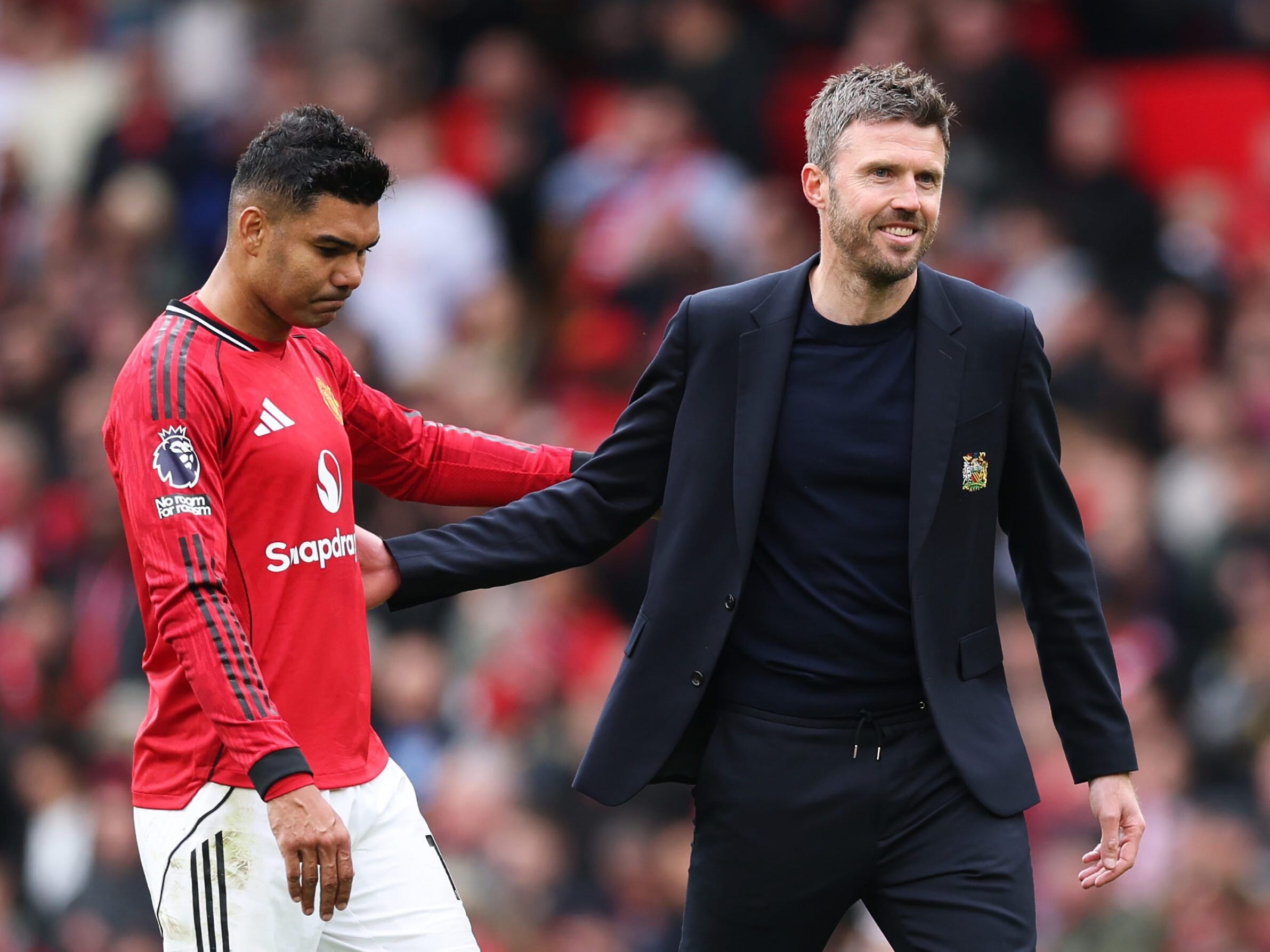
His pragmatic mid-block prioritises solidity over spectacle. It’s protected Casemiro’s legs. And has allowed the team to take advantage of players who excel in transitional moments.
It has been the perfect approach for stabilisation. It’s fine for grinding out results in difficult moments. Is it enough to challenge Arteta’s Arsenal, or Pep’s City, or whoever inherits Etihad’s sportswashing project? Unknown.
There’s also the question of in-game management. Carrick’s substitutions have often been slow. His adjustments when games turn against him have been reactive rather than proactive. These are coachable weaknesses, but they’re weaknesses nonetheless.
One solution: an experienced, high-calibre assistant. Someone who has operated at the elite level, who can complement Carrick’s man-management with tactical sophistication. Aaron Danks has been linked recently. Nothing concrete, of course. Danks worked under Emery at Aston Villa and has coached England youth teams. He’s Bayern’s number two. Whether that’s enough to bridge the gap to elite level remains to be seen.
Carrick is still young for a manager. He can grow into the role. But growth isn’t guaranteed, and United’s rivals aren’t standing still.
Recruitment, Not Coaching
Here’s the uncomfortable truth: while everyone focuses on the manager, United’s decline over the past decade hasn’t been created by coaching. The root cause is recruitment.
Count the managers since Ferguson retired. Moyes. Van Gaal. Mourinho. Solskjær. Rangnick as interim. Ten Hag. Amorim. Seven in 11 years. Some were bad appointments. Some were decent appointments undermined by circumstances. None lasted.
The constant isn’t the dugout. It’s the boardroom. The pattern of expensive misfires. A lack of coherent planning. Players bought for one manager, abandoned by the next. Wages bloated beyond reason. A transfer strategy that lurched from panic buy to shiny toy foisted by agent-of-the month, without any underlying model, a club style.
Jim Ratcliffe arrived two and a half years ago promising to change this - and then promptly abandoned the promise by appointing Amorim.
Recruit to a model. Build a coherent philosophy. Align scouting, analytics, and coaching. Implement a two-year rule: players get a couple of seasons to prove themselves, or they’re out.
By that measure, the system is almost working. Manuel Ugarte, signed for £50m from PSG, never convinced under Amorim and barely featured under Carrick. He’s gone this summer. Joshua Zirkzee, £36.5m from Bologna, looked lost from the moment he arrived. Serie A return incoming. Neither fit. Neither is staying beyond this summer. Deadwood is being cleared and the wage bill trimmed.
And the summer 2025 signings have all proven excellent. Matheus Cunha, immediate impact. Šeško, now the focal point of the attack. Bryan Mbeumo, reliable depth and rotation. Patrick Dorgu arrived six months earlier, and an injury has complicated what he might become post-Amorim but the profile looks right. Senne Lammens has been superb. These weren’t panic buys. They were targeted acquisitions to cover problem areas in the squad.
More of the same is needed this summer. Zero room for mistakes.
The pattern of expensive misfires hasn’t been fully broken, but it’s bending in the right direction. If United continue recruiting well this summer, addressing midfield properly, finding solutions on the left, the squad Carrick inherits permanently will be significantly stronger than the one he took over in January.
Building for the Next Manager
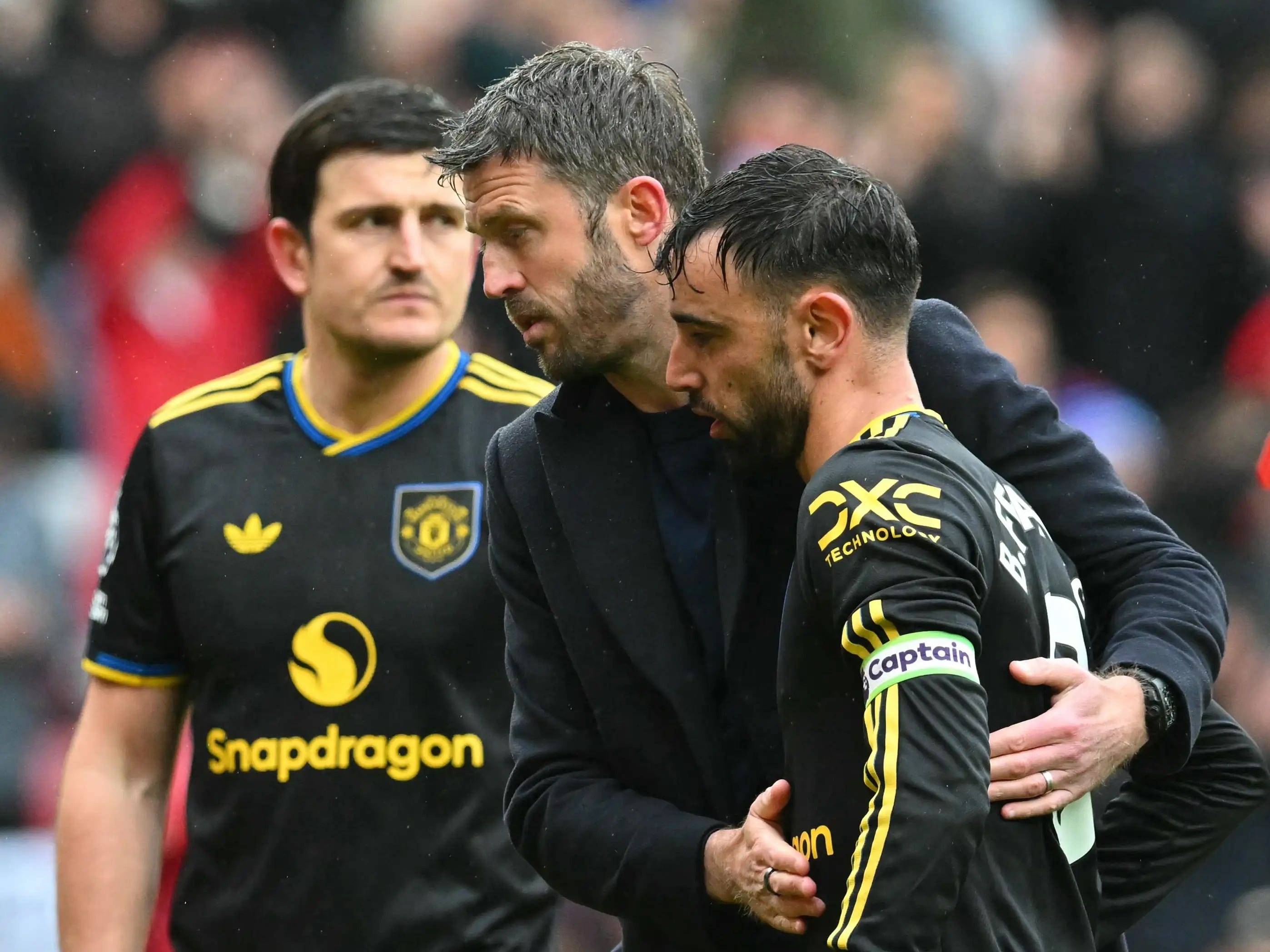
If United recruit to a model, the manager becomes less important. Players fit the system. The system survives coaching changes. Liverpool did this under FSG, transitioning from Rodgers to Klopp to Slot without collapsing until the Dutchman tinkered with a winning system.
City have built infrastructure that will outlast Guardiola. Brighton cycle through Potter, De Zerbi, Hürzeler without missing a beat.
Carrick doesn’t need to be elite if the recruitment is elite. For now, he needs to be competent, stable, and aligned with the model. Most of the results will follow from the players, not from tactical genius in the dugout. Albeit, questions of Carrick’s elite status, or not, will surely be asked next season.
And there’s another angle worth considering: even if Carrick isn’t the man to take United to the title, he can be the man who hands over a functional club to whoever comes next.
Think about what Ten Hag left Amorim. A squad built for one system, asked to play another. Confidence gone. Culture gone. Amorim never recovered.
Think about what Amorim left Carrick. A system that had collapsed entirely, players openly confused about their roles, results in freefall, the fanbase divided.
If Carrick avoids disaster, and given he’s raised the floor that seems likely, then whoever follows him inherits something different. A squad properly assembled. A culture stabilised. A pathway cleared. That’s valuable. That’s progress. That’s the opposite of the chaos that greeted the last two permanent appointments.
The alternative is familiar: sack Carrick after six months, hire someone else, start again, repeat the cycle.
Carrick is the safe choice. Probably the least risky choice. Given the alternatives it’s probably the right one.
He’s earned the job through results. Champions League secured. Stability restored. A squad that believes again, or at least pretends to convincingly.
But the real test isn’t whether Carrick can raise his level to elite. It’s whether the club can finally get recruitment right. The manager matters less than the model. The dugout matters less than the boardroom. It’s a difficult message for a fanbase still yearning for the next Ferguson, and rightly wary of the stupidity emanating from the suits.
But if Jason Wilcox, Christopher Vivell and Michael Sansoni deliver a properly balanced squad this summer, Carrick will look like a genius. If they don’t, he’ll be the eighth manager in 11 years to fail.
This pattern breaks in the boardroom, not the dugout. Carrick’s job is to hold things together while that work gets done. On the evidence so far, he’s capable of that much.
Whether he's capable of more is next season's question.
Really thoughtful piece and the recruitment over coaching argument is spot on. But theres a layer underneath it thats worth pulling out. The most important thing thats happened at United in the last decade isnt Carrick's appointment, its the quiet recalibration of what success actually means. For the first time since Ferguson left the club is treating stability and Champions League qualification as genuinely valuable outcomes rather than as failures dressed up in positive language.
Thats Carricks real advantage and none of his predcessors had it. Ten Hag won two trophies and got sacked because the baseline expectation was still title challenges. Amorim was given three months measured against the same impossible standard. every manager since Moyes inherited the previous managers mess and was judged against a version of United that hasnt existed for over a decade. The gap between institutional expectation and actual capability is what killed all of them. Carrick benefits from that gap finally closing, not because hes better than the others but because the club has finaly stopped pretending its 2008.
The uncomfortable question is whether this recalibrated baseline is a foundation or a ceiling. The Brighton model the piece references is instructive, they cycle managers and maintain competitiveness without ever wining anything. Liverpool won everything under Klopp but thats because they found a generational figure who transcended the system he operated within. Model-first approaches produce consistent 75-80 point seasons. the jump from that to 90 points and a title has historicaly required a manager who is bigger than the model not one who serves it. Carrick can absolutely be the right appointment for the next two years while the boardroom does its work. but the title question eventually requires someone with the capacity to bend the system around their own vision, and thats a different job description entirely.
I think the opportunity to run a 15 match audition with a new manager is just priceless. If only we could have done that with some of our previous appointments.
Amorim wouldn't have made it, 15 matches would have been long enough to see that his system was incompatible with the players we had. Ten Hag would have been gone because he only made things work by abandoning the playing style we hired him for. And we could all see from day one that Moyes was not the Ferguson successor we wanted him to be. Being Scottish was literally the only thing those two had in common. But anyway Carrick definitely passes. He won't be a disaster, we can be confident of that.